Mimicking behaviour is one of those things humans do constantly while insisting we are all “completely original people”. We copy accents after ten minutes in Newcastle, adopt colleagues’ phrases against our will, and suddenly start saying “absolute scenes” because a high profile business coach said it twice in 2022.
At its core, mimicry is ancient survival software. Long before boardrooms and LinkedIn thought pieces, copying other humans kept people alive. If the tribe ran when Derek screamed and dropped his spear, you also ran. The people who ignored group behaviour too often tended to become historical examples of “what not to do around large cats”.
Psychologically and biologically, mimicry appears tied to social bonding, learning, safety, and status. Humans learn through imitation before almost anything else. Babies copy facial expressions within months. Children mimic language, emotional reactions, habits, and social rules. Adults continue doing it constantly, just in more expensive clothes and shoes – never forget the shoes !
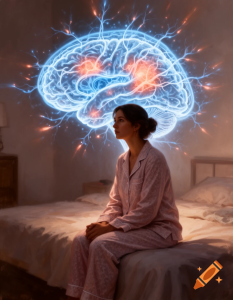
There is also the famous concept of mirror systems in the brain, linked to empathy and observational learning. Seeing somebody perform an action activates related neural patterns in the observer. In simple terms, humans are partly built to “internally rehearse” other people’s behaviour. Society runs on this. Otherwise every generation would have to rediscover trousers independently. The positives for this are quite substantial.
For individuals, mimicry is one of the fastest ways to learn competence. Speech, humour, confidence, professional skills, emotional regulation, fashion, ethics, even ambition are often socially transmitted. People frequently become more capable because they spend time around capable people. That old phrase “you become who you surround yourself with” is not mystical – it is behavioural osmosis.
Socially, mimicry creates cohesion: shared manners, customs, language patterns and expectations allow millions of strangers to cooperate. Entire civilisations depend on predictable imitation. Imagine driving if every motorist decided lane markings were merely “artistic suggestions”.
Businesses depend on mimicry far more than they perhaps even realise or admit. Corporate culture is essentially organised behavioural copying; employees mirror leadership tone, work ethic, communication style and emotional stability. If senior management panic publicly every Tuesday, eventually the entire organisation develops the nervous system of a frightened pigeon on the same weekly basis.
Positive mimicry in companies can spread professionalism, innovation, accountability and emotional intelligence. One genuinely calm, competent person in a crisis can stabilise an entire team because humans subconsciously sync behaviour. This is why good leaders are disproportionately valuable because people copy energy before instructions.
Markets themselves are deeply mimetic; trends spread because humans look sideways for social proof. Restaurants become popular because other people queue outside them. Luxury goods often function as prestige mimicry. Half the economy could honestly be summarised as “people noticing other people buying things”.
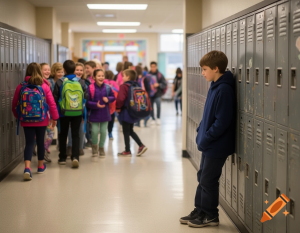
Now the darker side because mimicry is also how stupidity can scale. Humans copy socially rewarded behaviour whether it is wise or catastrophic. Panics, riots, bubbles, extremism, online pile-ons, disordered eating trends, reckless financial behaviour, and corporate groupthink all spread through imitation. History is full of situations where enormous numbers of people collectively thought, “Well everyone else is doing it”, moments before disaster.
Social media has industrialised mimicry. Previous generations copied perhaps dozens of people around them. Modern humans absorb behavioural signals from thousands daily. Monetisers, politicians, celebrities, outrage merchants, productivity gurus, crypto evangelists, wellness obsessives, motivational alpha-male podcasters speaking from rented Lamborghinis. Humanity now receives behavioural software updates every six seconds.
The result can be identity diffusion. People begin performing versions of themselves optimised for approval rather than reality. Entire personalities become assembled from trends, aesthetics and borrowed opinions. Occasionally you encounter somebody online whose entire identity appears to have been downloaded in sections from five separate apps.
For individuals, excessive mimicry can produce insecurity and loss of self-definition. Some people become emotional chameleons, adapting constantly to whichever environment they occupy. Useful socially, exhausting psychologically. If every interaction requires behavioural shape-shifting, eventually a person may not know which version is actually them.
Businesses suffer too. Excessive imitation creates blandness. Entire industries start speaking identical jargon, copying identical branding, chasing identical trends, then wondering why nobody feels emotionally connected to anything anymore. One company announces it is “redefining the future of human-centred innovation”, and suddenly every yoghurt brand sounds like it is preparing a Mars mission. Corporate mimicry also fuels catastrophic decision-making. Financial crashes often involve institutions copying competitors because refusing to join the trend risks looking foolish in the short term. Ironically, collective imitation frequently creates the very disasters nobody individually wanted.
At the societal level, mimicry can either strengthen civilisation or destabilise it depending on what gets rewarded. Healthy societies reward cooperation, restraint, competence, honesty and contribution. Those behaviours spread culturally. Unhealthy societies reward outrage, narcissism, deception and spectacle. Those spread too. Humans are extraordinarily adaptive creatures, but morally neutral in what we adapt towards.
This is why public figures matter more than people like to admit because behavioural modelling scales. If influential people normalise cruelty, dishonesty or performative aggression, imitation follows. If they model competence and dignity, that spreads as well; culture is partly a chain reaction of observed behaviour.
The strange thing is that mimicry is not the opposite of individuality. It is actually part of how individuality forms. Humans build themselves from borrowed fragments, then gradually refine them into something coherent. Nobody emerges from the womb with a fully formed personality and a preferred coffee order.
The healthiest version of mimicry is probably selective imitation. Learning from others without dissolving entirely into them. Borrowing useful behaviours while retaining independent judgement. Basically: “I will adopt your excellent communication skills, but not your habit of answering emails at 2:14am marked URGENT.”
Civilisation itself may largely be accumulated mimicry with occasional flashes of originality. Every culture, profession and institution is humans endlessly copying, modifying and transmitting behaviour across generations. Which sounds noble until you realise some of your responses do not exactly make sense, such as saying “you too” when a waiter says “enjoy your meal”.