There are some words that do not translate neatly into English from another language, and frankly refuse to behave when you try. Hiraeth is one of them. It sits there, arms folded, quietly judging every attempt to reduce it to “homesickness” or “nostalgia” like those are even remotely sufficient.
Hiraeth is not just missing home. It is missing a home that may not exist anymore, or perhaps never did in the first place. It is a longing for a version of something that lives more convincingly in memory than it ever did in reality. Think less “I forgot my charger at home” and more “something fundamental feels absent and I cannot quite name it.”
The word comes from Wales, which feels appropriate. If you have ever stood somewhere rugged and quiet, where the air carries a kind of history you cannot quite place, you will understand why the Welsh needed a word for this. Some, in comparison, may just shrug and say “bit sad, innit.”
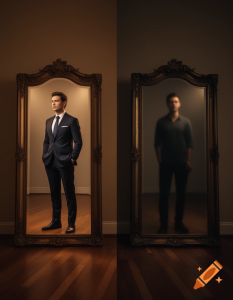
At its core, hiraeth is tied to identity. It is not just about a place, but about who you were in that place. The version of you that existed there: the people, life, feelings that things made sense in a way they do not now. You are not just looking back at a location, you are looking back at a self that felt more aligned, more whole, or at least more certain.
And here is where it gets slightly inconvenient. Hiraeth is often selective. Memory has a habit of smoothing out the rough edges. The arguments become quieter, the boredom fades into the background, and what remains is a curated highlight reel that feels emotionally accurate, even if it is factually questionable. Your brain has essentially produced a limited edition director’s cut of your past and convinced you it was the original.
This is why hiraeth can feel so intense. You are not comparing your present to your past as it was. You are comparing it to an edited version that has had all the awkward pauses removed, so it’s not entirely a fair fight.
There is also a forward-facing version of hiraeth, which is where it gets interesting. Sometimes the longing is not for something that happened, but for something that feels like it should have. A life path not taken, a place you never lived but feel drawn to; maybe even a sense that somewhere, somehow, there is a version of your life that fits better than the one you are currently in. It is oddly specific for something so intangible.
People tend to respond to hiraeth in one of two ways. Some try to recreate the past. They go back, reconnect, revisit, attempt to rebuild what was. Occasionally this works, but more often it reveals the gap between memory and reality. Places change, people change, we change. The thing you were longing for is not sitting there waiting, preserved like a museum exhibit.
Others recognise that hiraeth is not really about returning. It is about acknowledging what mattered and carrying it forward in a different form. The place might be gone, but the qualities you associate with it are not. Belonging, ease, connection, purpose. Those are not geographically fixed, even if they sometimes feel like they are.
There is a quiet honesty in accepting that some longings are not meant to be resolved. They are signals rather than instructions. They point to something important without necessarily providing a map back to it. Slightly unhelpful, but accurate.
Hiraeth also explains why certain things hit harder than expected:
1. A song you have not heard in years.
2. A smell that pulls you straight into a moment you had forgotten.
3. A random street that feels oddly familiar.
These are not just memories; they are reminders of a version of life that felt significant, whether or not you appreciated it fully at the time.
And yes, there is a slightly dramatic edge to all of this, but in a restrained, British way. No one is throwing themselves onto a chaise longue and wailing. It is more a quiet, persistent awareness that something meaningful sits just out of reach. You carry on, make tea, answer emails, but somewhere in the background there is a low-level hum of “something is missing.”
The practical question is what to do with it. Treating hiraeth as a problem to be solved tends to make it worse. Treating it as information is more useful. It tells you what you value, highlights what felt real, right, like home. From there, the task is not to chase the past, but to build something in the present that reflects those same qualities. Not identical, because that is not possible, but recognisable. Familiar in a deeper sense.
Hiraeth, then, is not just about loss, it is about awareness, sharpening your understanding of what matters by showing you what you miss. Slightly inconvenient, occasionally uncomfortable, but oddly clarifying.
And if nothing else, it is a useful reminder that “bit sad, innit” was never going to cover it.