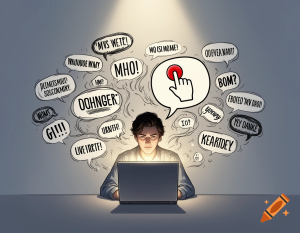
Today’s announcement that our government has legislated to ban under 16s from social media represents one of the most interventionist approaches to children’s online access ever proposed in the UK. On paper, it is designed to build on the Online Safety Act by preventing under-16s from accessing social media entirely, restricting communication features in gaming environments, and limiting access to sexually explicit AI chatbot content.
The political message is straightforward: if online harms cannot be sufficiently controlled, children should simply be prevented from accessing the platforms where those harms occur.
We now have a real-world case study in the form of Australia, which passed its own under-16 social media ban in December 2025. Despite strong political rhetoric, the practical questions remain largely unresolved; technology companies, digital rights groups, academics and even some child safety advocates have repeatedly highlighted the same challenge: age verification at scale is extremely difficult without either creating significant privacy and safety concerns or excluding legitimate users.
The Australian experience so far, following the implementation of its under-16 social media ban in December 2025, suggests that the public debate has often focused on the headline of “banning children from social media” rather than the reality of enforcement. Young people are highly adaptive; when restrictions are introduced, many simply move elsewhere. They migrate to smaller platforms, use VPNs, create accounts using false information, borrow credentials from older siblings or parents, or shift into encrypted and less visible spaces.
Many of these users may effectively gain “grandfathered” access unless platforms are required to apply consistent age verification across all accounts, not just new sign-ups. Without a universal verification requirement, there is a risk of creating a two-tier system where existing accounts continue largely unchanged while new users are subject to stricter controls. I cannot even begin to imagine what they may be exposed to there. In my view, the result is that risks can become harder, not easier, to monitor.
Separately, children under 16 seeking alternative methods of accessing the internet could be seen as leaving them with no other option that may encourage underhand behaviour. It is unclear how this may affect their development as they grow up, or what impact it may have on conflict within the home and the mental health of parents. This is not something that needs to be added to an already complex set of concerns.
This is also where a separate risk needs to be considered: how platforms and content monetisers respond to stricter age-based restrictions. There is a possibility that some services may reframe or rationalise existing content policies by leaning more heavily on adult-oriented or borderline harmful material, on the basis that stricter age gating will prevent younger users from accessing it. If that happens, it could shift the overall content environment in a way that concentrates more explicit or harmful material into spaces still accessible to older users, rather than reducing its presence online overall.
The UK proposal faces exactly the same challenge. The letter issued from the Secretary of State for Science, Innovation and Technology itself effectively acknowledges this by admitting that no ban can ever be entirely watertight. That is an important admission because it recognises the reality of modern internet use; any teenager determined to gain access to a platform is unlikely to be stopped solely by an age gate.
There is also a broader question about what impact such restrictions will have on children themselves. Social media is not simply a source of harmful content, but is where many young people communicate, organise activities, follow hobbies, participate in communities and maintain friendships. Removing access may reduce exposure to some risks, but it also removes access to many benefits. The debate is often presented as a choice between safety and danger when the reality is considerably more nuanced. I have heard parents of children with neurological or physical conditions saying that social media has given their children connections that have positively affected their life.
For younger teenagers, a ban may simply drive some activity underground. Parents may wrongly assume their children are protected when, in reality, they have moved onto alternative platforms that attract far less scrutiny. History suggests that prohibition rarely eliminates behaviour, it just changes where that behaviour occurs.
The proposed restrictions on gaming communication raise similar questions. Online gaming is no longer merely about playing games. For many children it has become a primary social environment. Restricting communication with strangers may reduce certain safeguarding risks, but it may also fundamentally alter how online communities function. Whether those trade-offs are justified remains open to debate.
The AI chatbot provisions perhaps raise the most interesting questions. Preventing AI systems from providing sexually explicit content to minors is a relatively straightforward safeguarding objective. However, it is difficult to argue that this addresses one of the major drivers of online harm among children. The vast majority of sexually explicit material encountered by young people does not originate from AI chatbots. It comes from websites, social media platforms, messaging services and peer-to-peer sharing.
This points to a broader issue with the overall package. The measures are heavily focused on access control rather than behaviour, education or digital resilience. They assume that reducing access will significantly reduce harm. The evidence for that assumption remains mixed.
The Australian experience suggests that bans generate headlines and public reassurance, but they do not remove children’s curiosity, social needs or willingness to experiment online. Young people typically find workarounds, often very quickly. VPNs, secondary devices, false ages, borrowed accounts and alternative platforms are all well-established methods of circumventing restrictions.
Ultimately, the proposals may make certain online activities more difficult for some children, but they are unlikely to eliminate them. The underlying challenges of harmful content, digital literacy, online grooming, exploitation and peer pressure remain.
The bigger question is whether policymakers are solving the right problem.